10,000+ English teachers have been reading this newsletter for 6 years: penned by teacher trainer, researcher and mediocre knitter Chiara Bruzzano, the Sunday newsletter brings you tips for teaching languages and learning English, insights into the quirkiness of British life and support for the Italian concorsi docenti. Every Sunday (ish...) straight to your inbox. Join us, it's free ✨
Can I start this newsletter with some absolutely mindblowing news? It's raining here! Not cats and dogs, as it were, but enough to make you notice. Did I manage to get drenched in the short walk to my car this morning? Yes, yes I did. Did I mind? Not too much, no, considering how hot it's been these past few months.
Enjoy this song from 1930: "I Don't Mind Walking in the Rain (When I'm Walking in the Rain with You)". Maybe it will make you feel cooler?
So, then: how's things with you? Are you managing the heat from a sun lounger and parasol, or are you more the "all-day-in-the-water" (or all day in front of a fan...) type? Whatever you're up to, I hope you're enjoying it.
As for me, I humbly come to your inbox today with the Part 2 of the photo diary from the infamous two months I missed the newsletter. If you missed Part 1, you can catch up with my Scarborough-Barcelona-Cambridge adventures here.
But now, more importantly: what incredible things await you in today's newsletter? Well, it's Part 2 of my photo diary, in which I will take you with me into my classroom, with a few activities you will be able to take into your own classroom. As I started writing this, however, I realised I had too much to share with you, so I'm having to split this Part 2 into, well... two parts - one this week and one next week. Who says newsletters can't multiply? At least I get to tell you everything I need to!
Ready to join? Cold juice in hand?¹ Let's go 🥤
First things first: what's the story here?
Just to remind you in case you were chatting to your new beach friends and didn't pay 100% attention to my previous newsletter², I taught on a teacher training course in June and July. My students were a group of Asian university students who were taking a degree in education, i.e. future school teachers³.
The setting was pretty lovely, too. 100 points if you can guess where this was?
The course was quite intensive and it included input sessions on most aspects of methodology, including teaching methods, lesson planning, giving instructions, teaching grammar, teaching the four skills, giving feedback, planning assessment and so on.
But it also included something that, as scary as it is for a novice teacher, can be extremely formative and practical: observed teaching practices. Our trainee teachers had to plan lessons, prepare their materials and co-teach lessons to groups of actual students. They were observed by us tutors, filmed (I know, gasp), and then received feedback on their teaching from us and from their peers.
As scary as this sounds, if handled with care and sensitivity, receiving feedback following a classroom observation can be an extremely powerful tool to improve our teaching. One quick example: instructions. Have you ever set up an activity that you thought was great, only to find yourself after 20 minutes with students who haven't completed it and don't even know what to do? The issue can often be in the way we phrase our instructions: this is really hard to diagnose by ourselves, whereas an external observer will more easily spot it.
Incidentally, classroom observations are very underutilised in Italy compared to most OECD countries: in the 2018 TALIS report, more than 25% of Italian teachers reported never having received feedback after being observed. By comparison, in the CELTA course, the most common international qualification for English language teachers, you get observed 8 times. In just one month.
Naturally, classroom observations should be formative in nature: they should aim to help the teacher identify their strengths, not just improve their weaknesses. I find this is a very important point, particularly because we know how self-critical teachers can be.
Starting off on the right foot: GTKY+M and goal-setting
Now, coming to the course itself. One of the things you might have pushed to the back of your mind but that I'm here with bells reminding you of, is that when you meet a new group (like you might do in September...), it's a good idea to take some time to set a strong foundation.
I chose a mixture of facts that would make me relatable and that would establish my professional credibility. They had to take a few guesses, but they got there in the end! And this allowed me to start diagnosing their English level (which I may as well not have bothered with since it was the most advanced group I've ever taught).
Then, we did a goal-setting activity, in which we asked them questions about what they were aiming to learn in the course:
Now, in this course, us tutors were trying to practise what we preached: I'm sure you've had the experience of sitting through a 2-hour teacher-centred lecture with zero interaction but a whole lot of fighting to keep your eyes open... about "engaging teaching activities" or "learner-centred methodology". Right. Well, we were trying to avoid all that, so we led by example by teaching with learner-centred activities: in this case, we asked students to write their 6 answers on post-it notes and go stick them around the room.
This added a kinaesthetic element to the lesson, getting students up and walking (i.e. not sleeping, considering how jet-lagged they were on their first day!), and it provided us tutors with a comprehensive picture of their initial needs and goals. Pro tip: review students' goals at the end of the year to see how far they've come and how much further they need to go.
Collecting and recycling language (the smart way)
At the start of this course, I didn't know much about what my trainees knew - a feeling I bet you can relate to. Could I talk freely about noticing and noticing the gap or would they frown? Were they already familiar with task-based learning or did they think a grammar gap-fill was a task (spoiler: it's not)? When you're dealing with the unknown, you have to feed as much as you can at the point of need.
Particularly at the start of the course, I wanted to build a strong foundation, because I couldn't exactly ask my trainees to teach communicatively and leave the read-aloud, teacher-led grammar explanation behind in their observed teaching without explaining why. So, while discussing the input on the course and related practical activities, I also fed a lot of theory in the first few weeks. Indeed, I had a section of the whiteboard dedicated to this:
But you know very well that learning something once is no guarantee that you will remember it. The same goes for the vocabulary we teaching in class. So, what do you do to aid retention? I mentioned last week about how I sometimes struggle to keep the emergent language that comes up in class organised so that I can recycle it. In this course, I figured out a simple way to do this, which I will explain in bullet points if you'll indulge me:
Take photos of your board with the language you want to remember to recycle
Run your photo through a tool like Google Lens: it will produce a fairly accurate list of the language, but in text form
Copy and paste that list into a master list of vocabulary. For convenience, and to help my scattered brain survive life, I keep this master list on a Google Drive document I can open from my phone
Every now and then, open up that document, split your class into teams and play "back to the board" to review that vocabulary:
Engagement, vocabulary consolidation, teamwork: what's not to love?
And with that, let me end today's newsletter. In the next newsletter, you will hear all about other activities in my course, including working with coursebooks (and working out why coursebooks are the way they are), using Lego in the classroom, using language games and what we learned from visiting British schools.
Until then, so long, dear reader! Have you ever been part of a classroom observation? If so, how did it go? And what kinaesthetic activities do you use in your classes? I'm all ears!
I wish you a lovely Sunday with your loved ones.
Take care, dear teacher ✨
¹ I can't do cold drinks in the morning, even in the summer. I appear to be destined to a lifetime of sweating over hot coffee in the August heat. But surely I can't be the only one?!
² How could you? You mean to tell me you were - what - "enjoying your summer" instead of staying glued to your phone to learn about my forays into teacher training? Perish the thought...
³ Side note: the word "lovely" was probably invented for this group of students. Insightful, committed, well-mannered are also words that occur to me to describe them. I am utterly convinced that this was the universe's way of rewarding me for all the hours of my life I've spent cooking Italian food for British people.
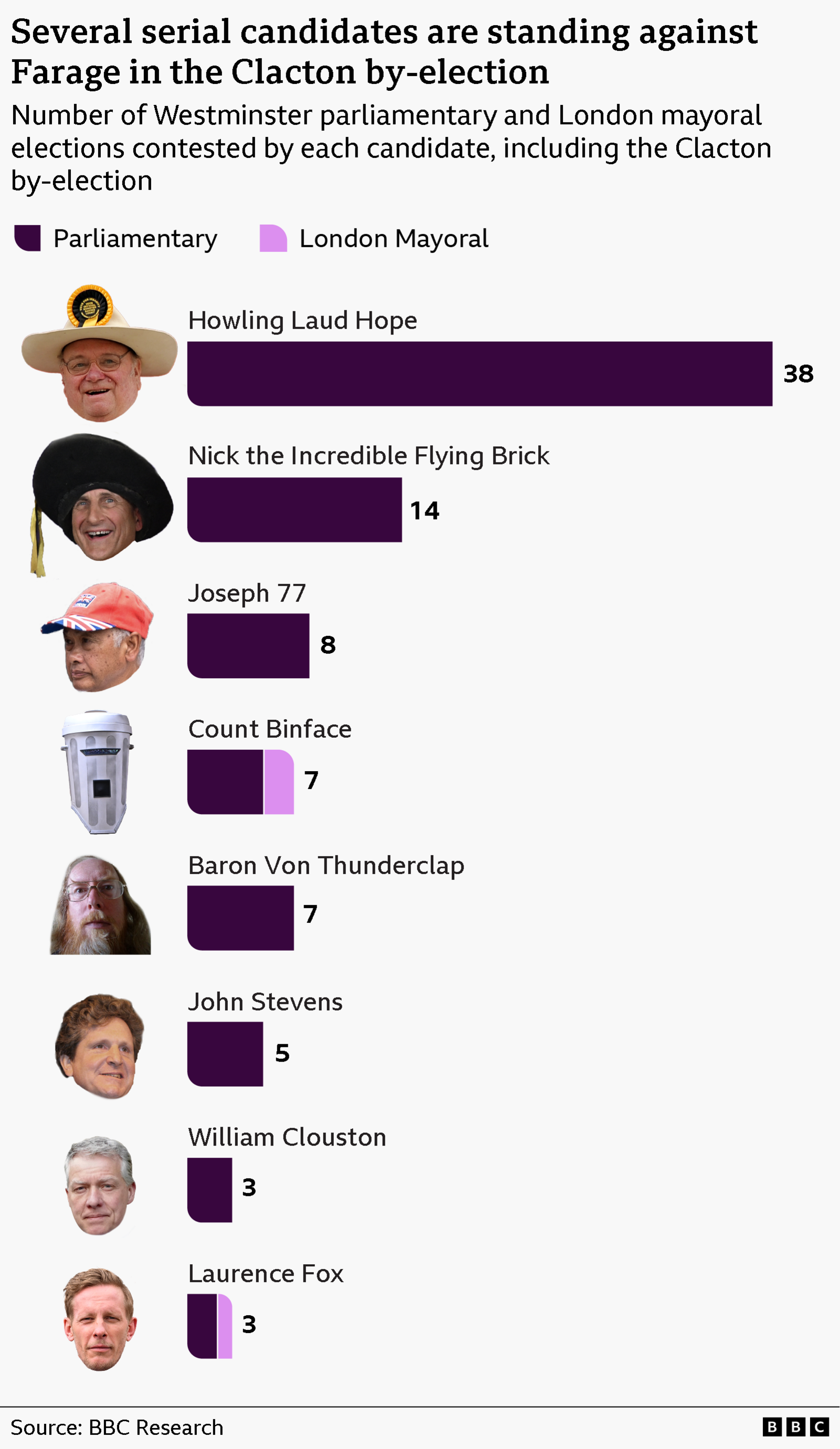
P.S.: My weekly suggestion for things to listen to/watch/read to improve your English while relaxing: If you're looking for a piece of fairly hilarious news from Britain to follow this week, I've got you covered.You may have heard of Nigel Farage's (yes, remember Brexit?) recent decision to quit Parliament in order to trigger a by-election in which he planned to run. Essentially, he was going to be investigated for potential irregularities in funding to his party, so he thought he'd quit, get re-elected and then he could claim the people had chosen him. It backfired a little because the other major parties boycotted the election and are not running against him. This has resulted in him running for his seat, which is based in a place called Clacton-on-Sea, against a bunch of joke candidates:
That election is taking place next week, and one of them main joke candidates is Count Binface. Joke candidates are a beloved tradition in British politics, and they're by no means new:
Though of course if you want the more serious explanation for the Count Binface phenomenon, you can have a look here. As the owner of the following t-shirt, I'm afraid I won't be able to help with the serious bit:
Sorry, not sorry!
✨Cool things I heard this week
I start as a tenured teacher in September and I'm so looking forward to having cake to celebrate my first day.
What did you think of today's newsletter?
❤️ I loved it: well, thank you so much! Hit "reply" to let me know (it makes my day) or hit "forward" and send it to a friend
👉 I'm new, a friend sent me this: great to have you here! To receive this newsletter every Sunday (ish), for free, subscribe here
🚀 I want more: no problem - check out all my previous newsletters with tips, lesson plans and ramblings here or join our YouTube channel
👎🏻 Meh, I'm not sure: that's absolutely fine: you can unsubscribe from the Sunday newsletter (but still occasionally receive important communications about your courses) or Unsubscribe from all emails.
10,000+ English teachers have been reading this newsletter for 6 years: penned by teacher trainer, researcher and mediocre knitter Chiara Bruzzano, the Sunday newsletter brings you tips for teaching languages and learning English, insights into the quirkiness of British life and support for the Italian concorsi docenti. Every Sunday (ish...) straight to your inbox. Join us, it's free ✨
Read more from The Sunday(ish) newsletter - LanguagEd
Join 10,450 readers Add your words to our community Padlet Dear Reader, For lack of a more dignified way to describe this: this Wednesday, I sweated a lot. Let me back up a little: a few months ago, I submitted a proposal for a talk for the Macmillan New Voices conferences. Out of over 200 proposals, they selected 13, including mine. Naturally, as the impostor syndrome commander-in-chief, my first reaction to this was: Then, I slowly became acquainted with the idea, even became quite fond of...
Join 10,450 readers (and counting!) Dear Reader, Do you have one of those places you always walk, cycle or drive past on your way to work and never really stop by... although you always wish you did? I have one¹ in particular: This is one of many (200,000, including a few in Italy) Little Free Libraries spread across the world. The concept is simple, as apparent from their motto: you take a book, you share a book. I will say, though, maybe their motto should also include: you stop rushing...
Join 10,450 readers (and counting!) Dear Reader, How are you gearing up for the new school year? Have you got: ✔ Teaching materials sorted ✔ Teaching wardrobe ready ✔ Human batteries appropriately charged? No? Cool: welcome to 99% of the teaching population! It's welcoming, cosy and non-competitive here - we're a scatterbrained but nice bunch. School has been underway for well over a week this side of the Pond and against all odds, this beginning of the school year was again successfully...